


Gyokuro is one of the finest types of Japanese tea. Sencha, black tea, and hojicha are made from the same tea plant, but gyokuro’s defining feature is that it grows under shade for about 20 days before harvest. Tencha, the raw material for matcha, needs about 10 days of shade, so gyokuro requires twice as long. This cultivation process of shielding the leaves from sunlight creates gyokuro’s unique flavor.
Gyokuro is known for concentrated umami and sweetness, a mellow and rich flavor, a distinctive aroma, and deep, vivid green leaves. These qualities are closely tied to shaded cultivation. Its nori- and ocean-like aroma, called “covered aroma,” comes from preserving aroma while suppressing the breakdown of umami compounds. Gyokuro also contains abundant chlorophyll, associated with various health benefits; this is another effect of shaded cultivation and gives the leaves their deep green color.
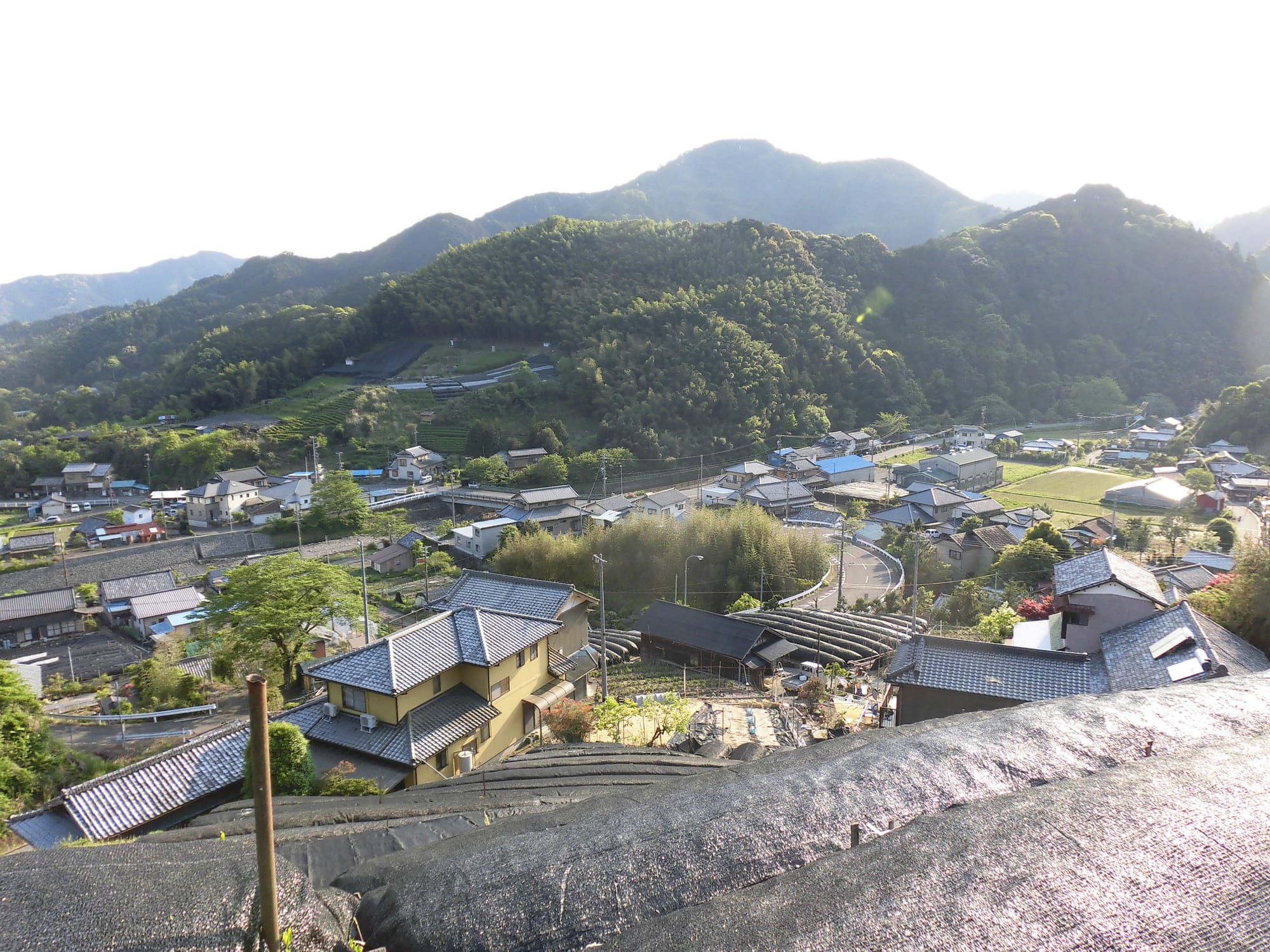
Asahina gyokuro, grown upstream along the Asahinagawa in Okabe, is counted alongside Uji in Kyoto and Yame in Fukuoka as one of Japan’s three great gyokuro regions.
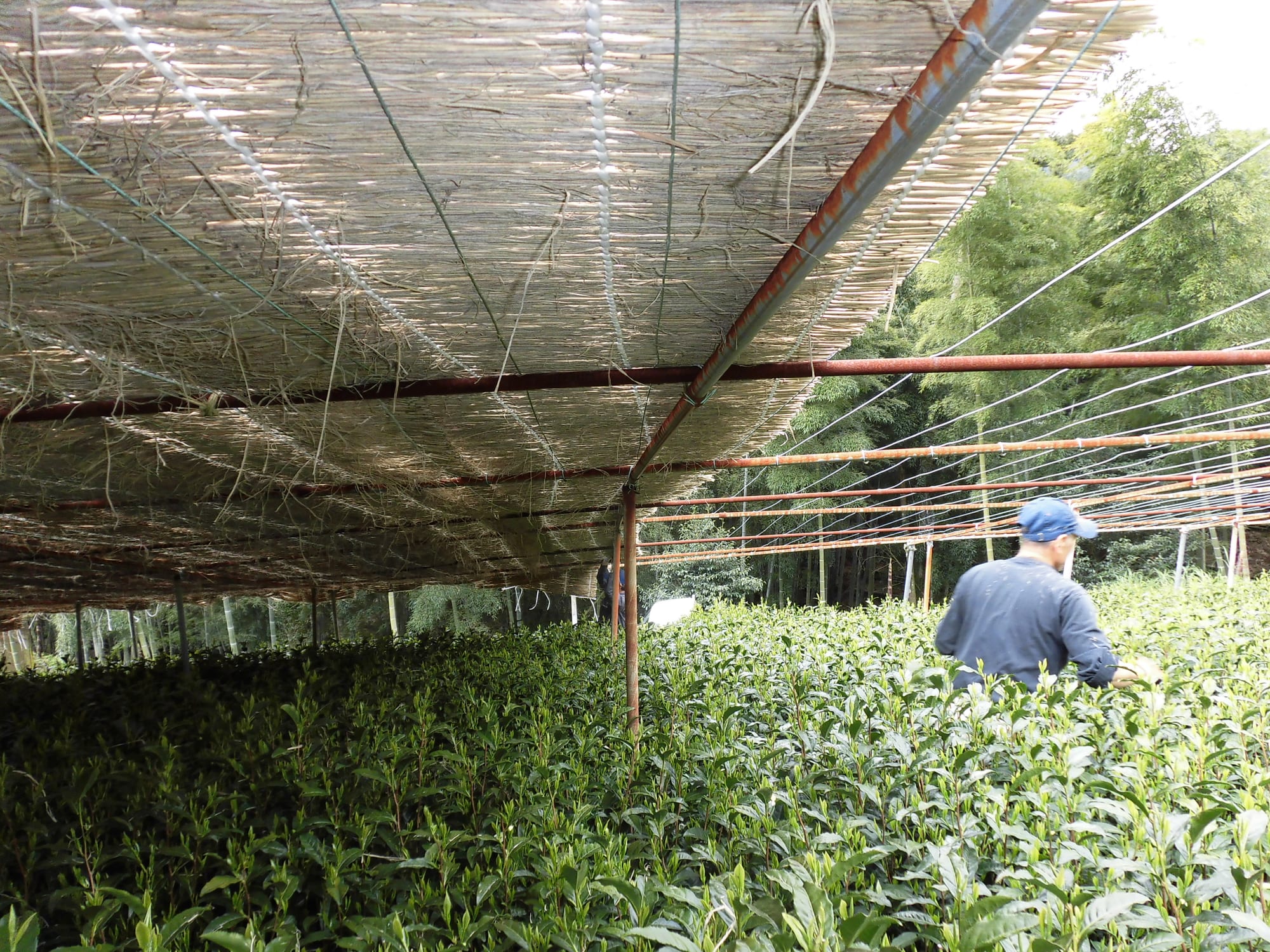
Over gyokuro’s long history, covering materials have changed from natural straw and komo to synthetic fibers. Behind this shift are demands for cost and time efficiency and the aging of tea workers. In a world pursuing efficiency everywhere, Mr. Miyazaki’s is the only farm in Japan that continues to protect gyokuro quality with the natural-material “komo-gake” method.
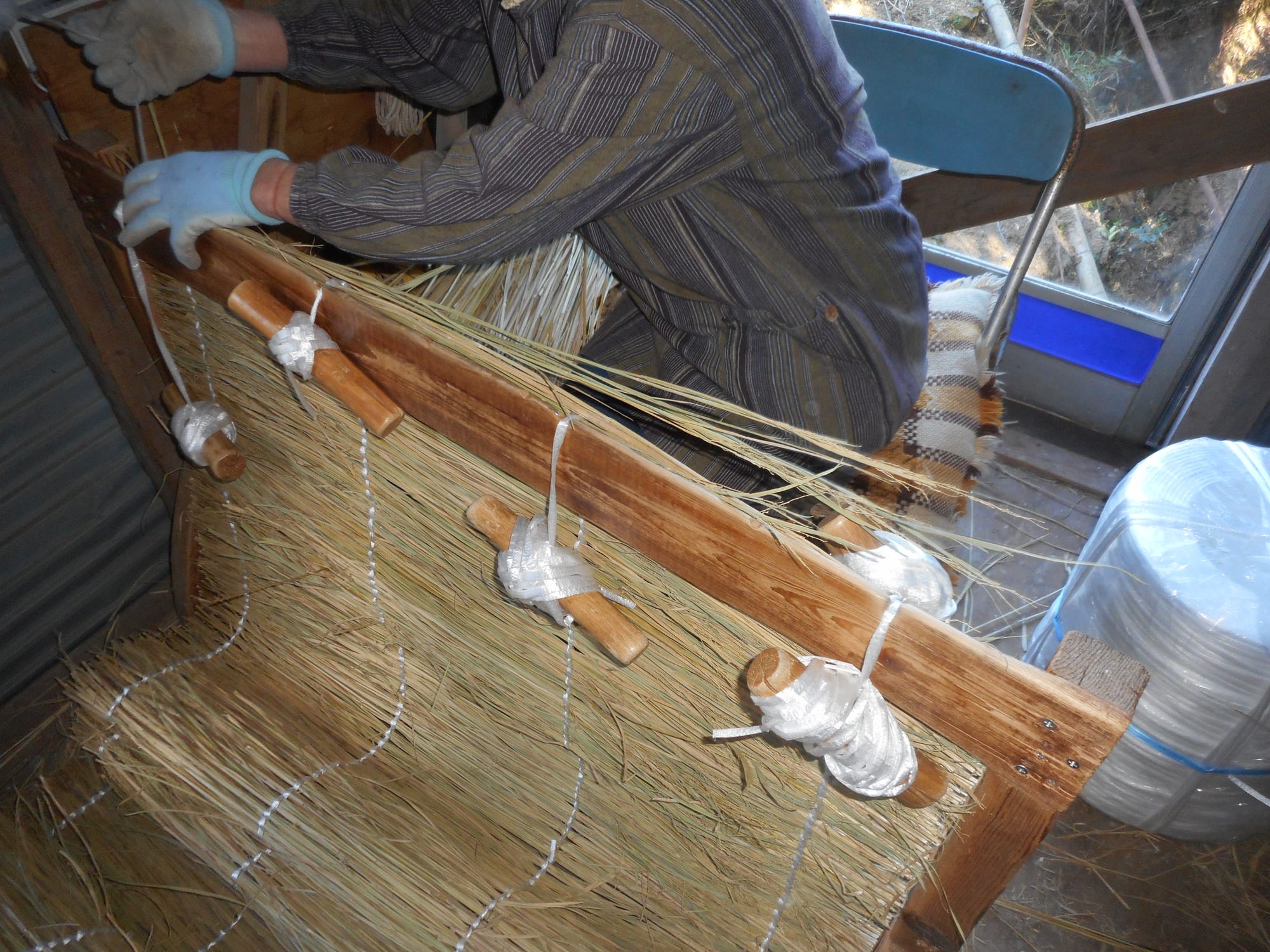
A komo is a straw covering traditionally used to block sunlight. The straw used here is rice grown by Mr. Miyazaki in his own fields. Woven by hand with skill, each komo is strong and supple enough to last as long as seven years. This durability is the first difference from synthetic fibers. Komo swells when it absorbs moisture and shrinks as it dries. That breathing brings the leaves closer to their natural state while shading them; combined with the komo’s aroma, it draws out a distinctive, deep covered aroma. The leaves take on fragrance readily, further enhancing gyokuro’s umami.
Not only does the komo itself last, the tea leaves also keep longer and can be aged. Gyokuro is generally harvested in spring, rested until summer, and then distributed; this aging period tightens its umami. Ordinary gyokuro is considered best aged for about one year and may deteriorate beyond that. Gyokuro made with komo-gake can be aged for two or three years, concentrating the umami further.
There have even been cases in which gyokuro made here was aged for as long as five years without damage. Unlike ordinary gyokuro, this gyokuro grown beneath komo is the only tea in the world permitted to call itself “komo-gake gyokuro.”
Even now that machine harvesting is common, Mr. Miyazaki has one reason for insisting on hand-picking: to protect the highest quality.
A machine can harvest a wide area at once, but cannot judge leaves as human hands do, so it cannot guarantee the quality of every leaf. Hand-picking selects only new shoots that have reached their best condition at that moment. Gyokuro made from these carefully selected shoots has a soft aroma, lingering umami, and refined sweetness. Its mellow flavor, with little bitterness or astringency, is possible because it is hand-picked.
Hand-picking takes time and effort, but devotion to each individual leaf supports gyokuro’s quality. Choosing quality over efficiency—that is Mr. Miyazaki’s hand-picked gyokuro.
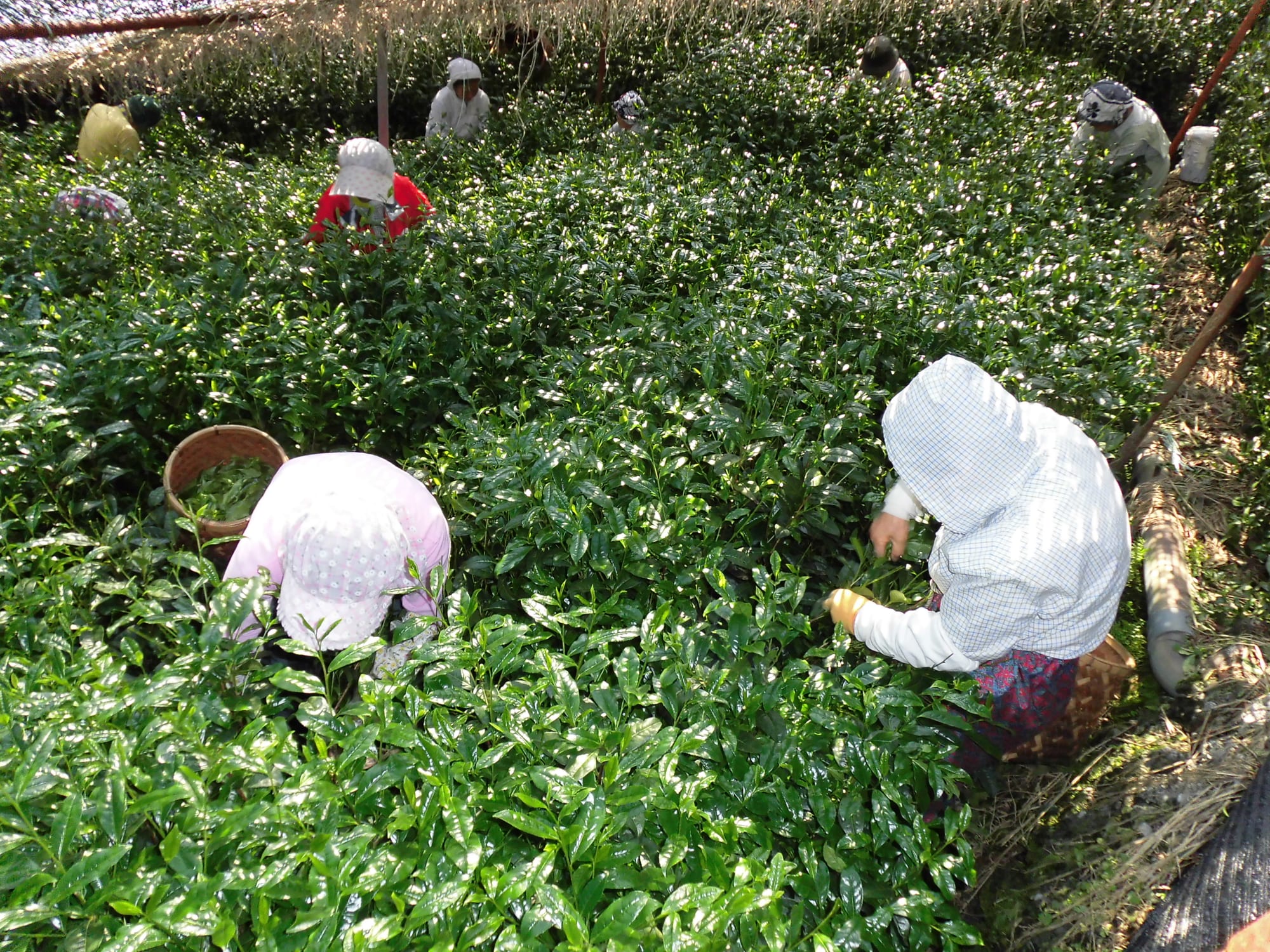
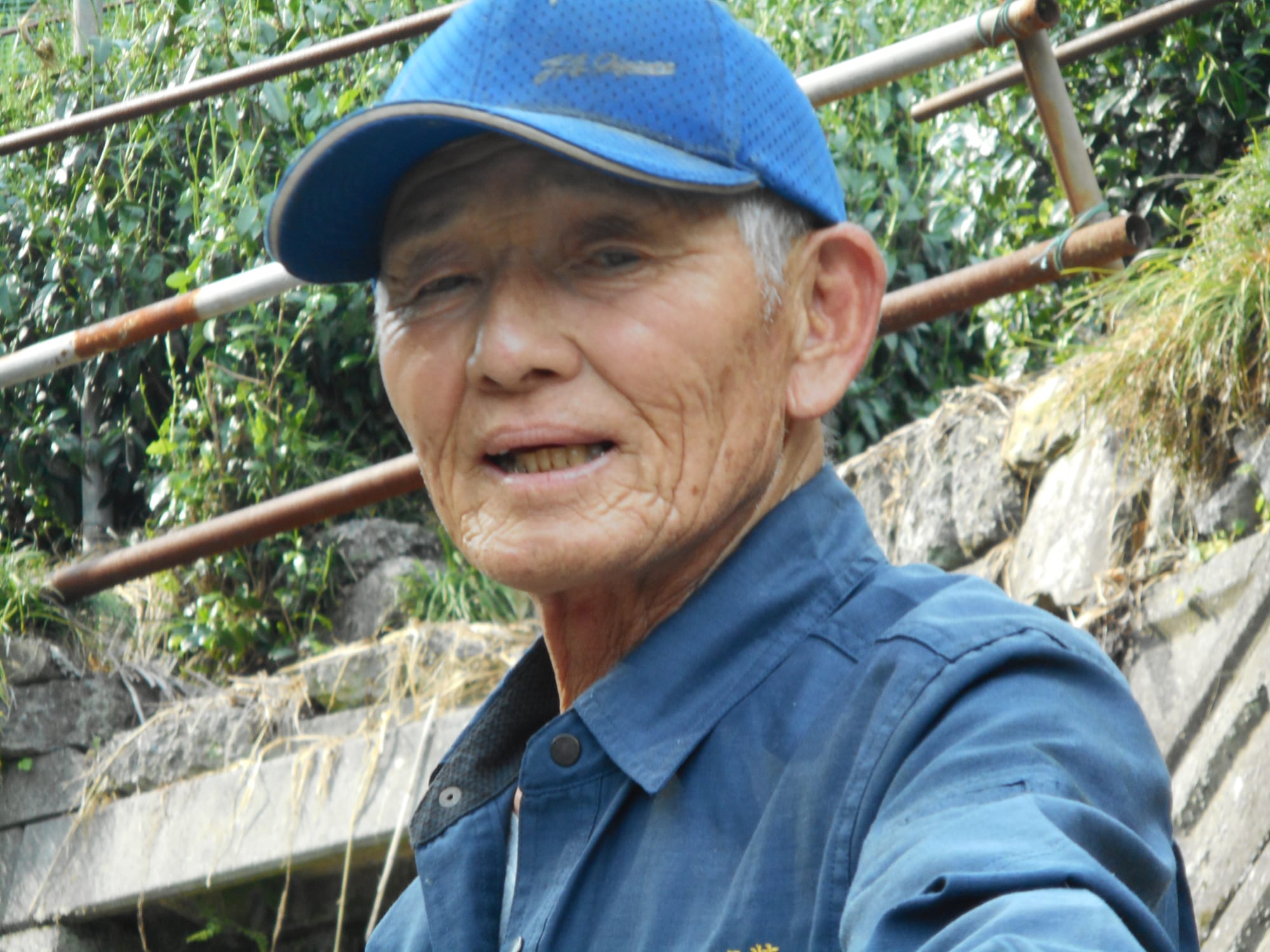
As tea-making becomes more efficient, hand-picking and traditional covering methods grow rarer each year. In Japan, only one farm continues both hand-picking and komo-gake cultivation. Mr. Miyazaki is truly one of a kind.
Komo-gake is difficult to mechanize and demands enormous effort and experience. By refusing to spare that effort, the farm grows the rich umami and aroma unique to komo-gake gyokuro.
Mr. Miyazaki’s tea-making does not rely on numbers and data alone. Each task takes subtly different time each day and year according to the weather, leaf color, firmness, and aroma. To bring leaves in ever-changing conditions to their best state, the craftsman’s intuition passed down from before machines became common is essential. As if listening to the voice of the tea, Mr. Miyazaki observes every change and manages the plants accordingly.
Hand-picking, komo-gake, and the producer’s experience and sensitivity overlap to create a cup that mass production can never reproduce—a gift of history with supreme flavor and cultural value.
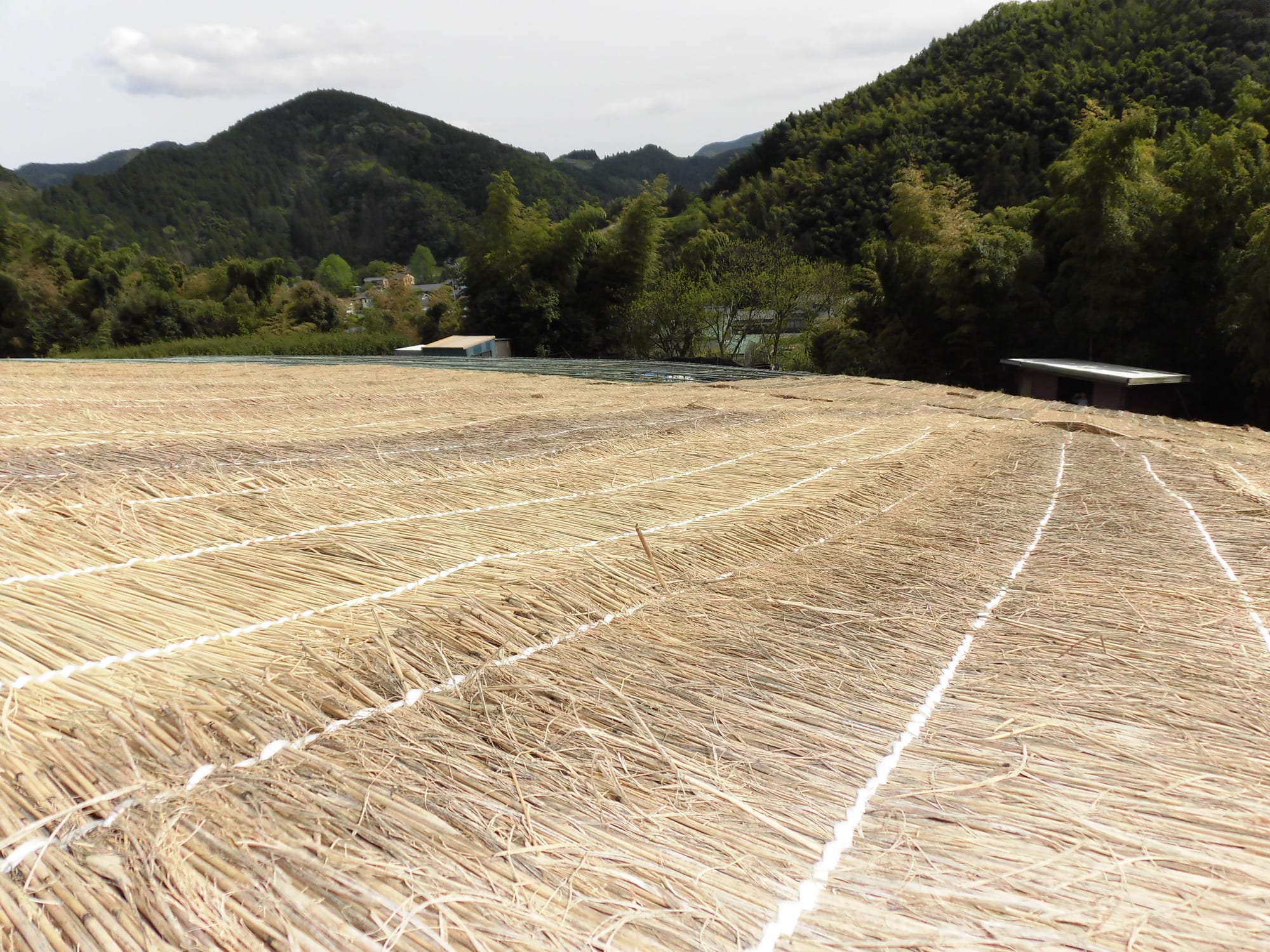
Only this gyokuro, made by Mr. Miyazaki with time-consuming hand-picking and komo-gake, embodies an umami ordinary gyokuro cannot reach.
In a world where the standard of “ordinary” is always changing, this tea embodies an unwavering ordinary. Its unchanging komo-gake flavor and landscape exist because the maker has devoted himself to gyokuro.
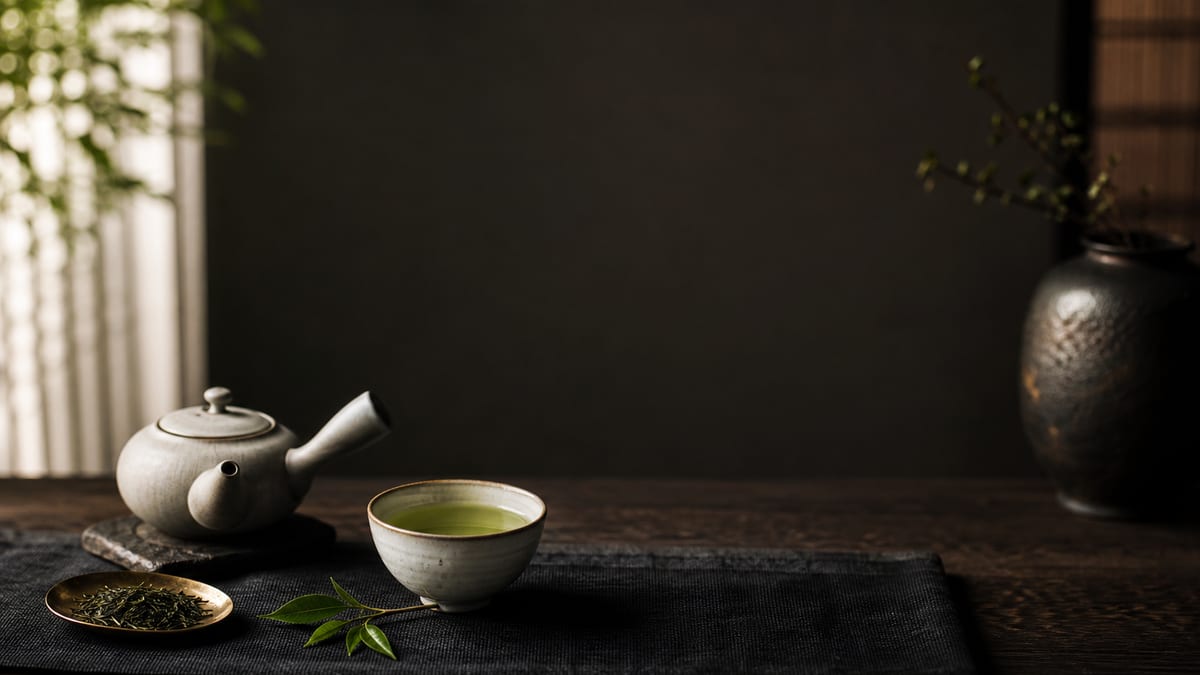
Harvest comes once a year, in May. We deliver Japan’s only komo-gake gyokuro in limited quantities.
Visit the shop →